

Who Is More Rational? You or the Market?
Instructor: Tyler Cowen, George Mason University
Can market anomalies help you beat the market? In this video, we explore effects like momentum and Mondays—but explain why these patterns don’t last, and why your emotions are often your worst investing enemy.
We saw in earlier videos that markets respond quickly to new information, and often times, accurately. This is sometimes called, The Wisdom Of Crowds. And this leads us to Investment Rule #4: Even if markets are sometimes imperfect or irrational, do not try to beat the market. Markets can be wiser than any individual trader.
Ultimately, markets are constrained by the rationality of traders, but traders themselves are not always rational. People have all kinds of biases: they can be overconfident, they tend to follow the herd, they’re not always very numerate, and the list goes on. It’s not surprising, therefore, that markets don’t always behave efficiently. Markets, for instance, tend to be more volatile than might be expected from rational factors alone. Robert Shiller won a Nobel Prize in Economics for his work in this area. There are also market anomalies we’ve seen over the years, things like the Monday Effect and the January Effect, which say that stocks tend to fall more on Mondays than on other days, or maybe they increase more in Januaries than in other months. There has been some evidence for these effects, but the effects tend to disappear once investors learn about them.
More stable, perhaps, is the Momentum Effect, which says that past performance does predict future performance at least a little bit. In particular, portfolios that buy past winners tend to outperform in the medium term. This could happen because, although investors respond to information in the right directions, they sometimes under-respond. For instance, good news is not always fully reflected right away in prices. And so, buying past winners can sometimes yield extra profits. But I would stress, this is by a very small amount. In a course on what is called “Behavioral Finance,” we would spend more time on these possible price anomalies and different explanations for their presence.
In this talk, however, I’d like to focus on the most important points for you as a personal investor. At the end of the day, market inefficiencies or not, the market is still really hard to beat. Remember that despite some possible market inefficiencies, most money managers don’t beat the market, and even fewer do so year after year. So, should you try to beat the market? No. Don’t forget that you, too, are subject to overconfidence, you probably don’t update probabilities perfectly efficiently, and when the stock market is crashing, you too are likely to behave more emotionally than you should.
In short, most of the time, the market is probably more rational than you are, even if all of us are a little crazy at times. Even the great investor, Warren Buffett, who at times has beaten the market himself, doesn’t think that most other investors should try to do the same. [Warren Buffett] I got a dual answer to that. If you are not a professional investor. If your goal is not to manage money in such a way as to get a significantly better return than the world, then I believe in extreme diversification. [Tyler] In fact, Buffett has told his heirs, “Don’t do what I do. Invest in general, well-diversified index funds instead.” We agree.
And so, the takeaway here is: even if markets are inefficient or irrational, you still shouldn’t try to beat the market.
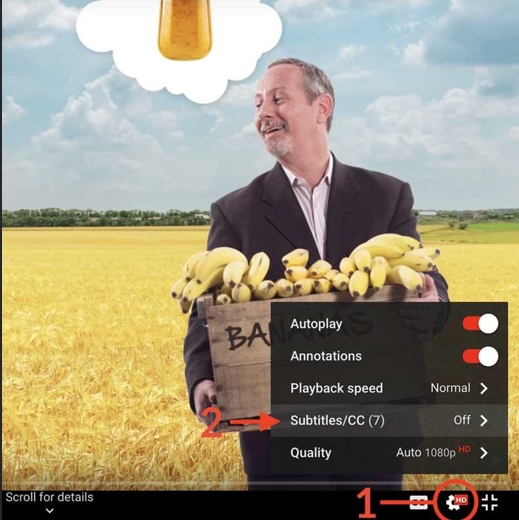
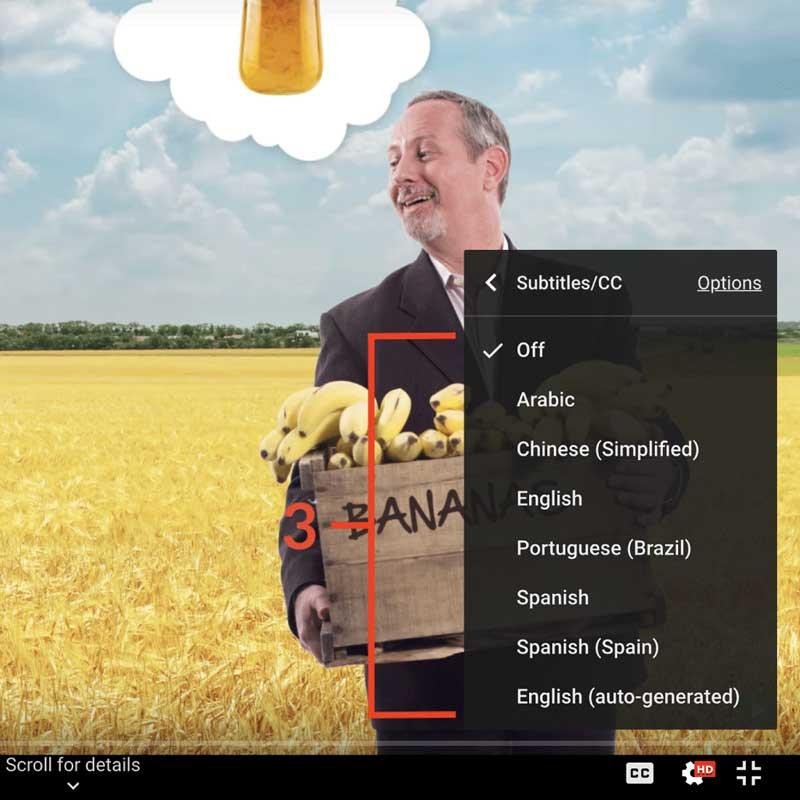
How to turn on captions and select a language:
- Click the settings icon (⚙) at the bottom of the video screen.
- Click Subtitles/CC.
- Select a language.
Contribute Translations! Join the team and help us provide world-class economics education to everyone, everywhere for free! You can also reach out to us at [email protected] for more info.
We aim to make our content accessible to users around the world with varying needs and circumstances. Currently we provide:
- A website built to the W3C Web Accessibility standards
- Subtitles and transcripts for our most popular content
- Video files for download

This work is licensed under a Creative Commons Attribution-NoDerivatives 4.0 International License. The third party material as seen in this video is subject to third party copyright and is used here pursuant to the fair use doctrine as stipulated in Section 107 of the Copyright Act. We grant no rights and make no warranties with regard to the third party material depicted in the video and your use of this video may require additional clearances and licenses. We advise consulting with clearance counsel before relying on the fair use doctrine.